
Colophon in a Book:
By Mike Ferrell | March 17, 2016
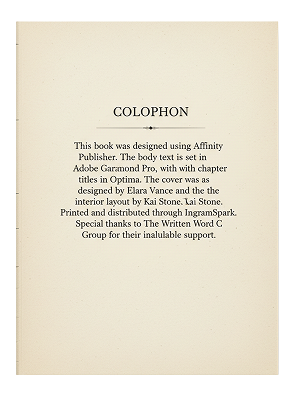
Learn what a colophon is in a book, why it is used, and how to create a colophon for self-publishing. Includes examples, formatting tips, and best practices for professional book production.
Quick Answers About Colophons
What is a colophon in a book?
A colophon is a section, usually at the end of a book, that provides details about how the book was produced, including printing methods, fonts, paper type, and design credits.
Do self-published books need a colophon?
No, a colophon is optional, but it is often included to provide transparency about production and to give credit to contributors.
Where does a colophon go in a book?
A colophon is typically placed in the back matter, often on the final page or near the end of the book.

What Is a Colophon in a Book?
Definition:
A colophon is a section of a book that describes the technical and production details of how the book was created, including printing methods, materials, typography, and contributors.
Traditionally, colophons were used by printers to document the production process. In modern publishing, they are optional but still used in both traditional and self-publishing.
What Does a Colophon Include?
A colophon can include a range of production and design details.
Common elements include:
- printing method (e.g., digital or offset printing)
- paper type and weight
- typography and fonts used
- book design and layout credits
- software or tools used in production
- printing company or service
For example, a colophon might mention printing specifications used by companies like DiggyPOD or distribution platforms such as Amazon KDP and IngramSpark.

Why Is a Colophon Important?
Although optional, a colophon provides several benefits.

Documents the Production Process
A colophon records how the book was made, including materials and techniques.

Credits Contributors
It allows authors to acknowledge:
- designers
- editors
- printers
- production tools

Adds Professional Detail
Including a colophon can make a book feel more polished and aligned with professional publishing standards.

Provides Transparency
Readers and industry professionals can understand the technical aspects of the book’s production.

How Does a Colophon Work?
A colophon functions as a technical summary of book production.
It is typically:
- placed at the end of the book
- formatted as a short paragraph or page
- written in a concise, factual style
Unlike front matter, a colophon is not required for distribution but is often included in professionally produced books.
Where Should a Colophon Be Placed?
A colophon is usually placed in the back matter of a book.
Common placement options include:
- the final page
- after the acknowledgments
- before or after the index
This placement keeps production details separate from the main reading experience.

How to Write a Colophon for Self Publishing
Creating a colophon is straightforward when you follow a structured approach.

Step 1 - Identify Key Production Details
Gather information about:
- printing method
- paper type
- fonts and typography
- layout and design tools
Step 2 - List Contributors
Include credits for:
editors
designers
illustrators
production services

Step 3 - Keep It Concise
A colophon should be brief and factual, typically one short paragraph or a single page.

Step 4 - Use Clear Formatting
Use simple, clean formatting consistent with the rest of the book.
Examples of Colophon Use Cases
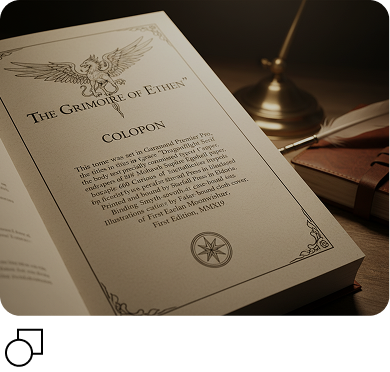
Fiction Books
Often include minimal colophons with basic production details.
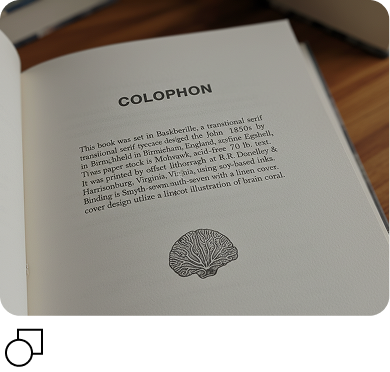
Nonfiction Books
May include more detailed colophons describing:
- research tools
- formatting methods
- production processes
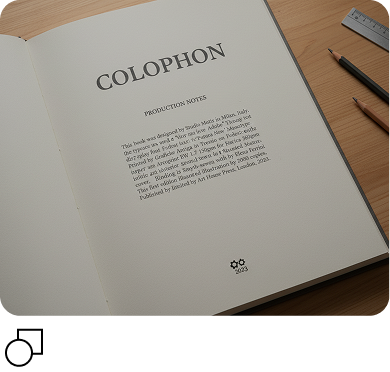
Art and Design Books
Frequently include detailed colophons with:
- paper specifications
- printing techniques
- typography details
Colophon vs Copyright Page
| Feature |
 Colophon
|
 Copyright Page
|
|---|---|---|
| Purpose | Production details | Legal information |
| Location | Back matter | Front matter |
| Required | No | Yes |
| Content | Printing, design, materials | Copyright, ISBN, rights |

When Should You Include a Colophon?
Include a colophon when:
- you want to document production details
- your book involves design or technical elements
- you want to credit contributors
- you are producing a premium or professional edition
Key Takeaways
- A colophon is a section that describes how a book was produced.
- It typically appears in the back matter of a book.
- It may include printing details, paper type, fonts, and contributor credits.
- A colophon is optional but adds professionalism and transparency.
- It is commonly used in both traditional and self-publishing workflows.

FAQ Section
What is a colophon in a book?
A colophon is a section that provides details about how a book was produced, including printing methods, materials, and design information.
Is a colophon required in self-publishing?
No. A colophon is optional and is not required for publishing or distribution.
Where is a colophon located?
A colophon is typically placed at the end of a book in the back matter.
What is included in a colophon?
A colophon may include printing details, paper type, fonts, design credits, and production tools.
What is the difference between a colophon and a copyright page?
A copyright page provides legal information, while a colophon provides production and design details.

Summary
A colophon is a section at the end of a book that describes how the book was produced, including printing methods, materials, and design details.
Colophons are optional in modern publishing but are often included to provide transparency and credit contributors involved in the book’s production.
Unlike a copyright page, a colophon focuses on technical and creative aspects rather than legal information.
Other Topics You May Be Interested In


People Also Ask
What is a colophon in publishing?
A colophon is a section of a book that describes the technical details of how the book was produced. It typically includes information about printing methods, paper type, typography, and design credits, and is usually located at the end of the book.
Do self-published books include a colophon?
Self-published books may include a colophon, but it is not required. Many authors choose to include one to provide transparency about production and to credit contributors involved in the book’s creation.
Where does a colophon go in a book?
A colophon is typically placed in the back matter, often on the final page of a book. This placement keeps production details separate from the main content.
What information is included in a colophon?
A colophon can include printing methods, paper specifications, fonts used, design credits, and software tools involved in production. It serves as a technical summary of the book’s creation.
Why is a colophon important?
A colophon is important because it documents how a book was produced and provides credit to contributors. It also adds a level of professionalism and transparency to the publication.
What is the difference between a colophon and front matter?
Front matter appears at the beginning of a book and includes introductory and legal information, while a colophon appears at the end and focuses on production details.