
Netflix Just Validated What BookTok Already Knew. Here's What That Means for Your Book.
I think every author, if they’re being totally honest with themselves, has dreamt of seeing their book turned into a movie. In recent years, maybe that dream has shifted from the big screen to landing a major TV series, but either way, there’s something exciting about being picked by Hollywood. And thinking about which stars would play the main characters from your book.
But this is a really hard goal to achieve. One, because it’s so expensive. A movie studio or TV studio is making a $10+ million bet on your book. But also because if you’re not picked, how are you going to make a two hour movie on your own? Even a 30-minute pilot is a Herculean effort to independently make.
The result? If authors wanted to create video content, they turned to YouTube, Instagram, and TikTok. And those two worlds (short form vs. long form) never really mixed.


That’s all set to change in August, when Netflix is adding short-form video content from the biggest digital publishers in the world directly to its platform. Architectural Digest's home tours. BuzzFeed's Tasty cooking videos. People's celebrity profiles. Rolling Stone. Vogue. Bon Appétit. All of it, available to every Netflix subscriber, right next to Stranger Things and whatever prestige drama everyone is watching this fall.
You can watch these in formats ranging from three-minute quick-hits to twenty-minute episodes. In the living room. On the same screen where you used to have to have a cable package.
The headline interpretation of this news is: Netflix is getting into short-form content.
The more interesting interpretation is something else entirely.
Short-form video built around expertise and story is now mainstream entertainment.
And if you have a book, you have both of those things.
Why This Is a Book Marketing Story
Think about what Netflix is actually paying for here.
They're not paying for BuzzFeed's brand. They're paying for Tasty's food videos. The specific clips that made someone pause their scroll, watch a three-minute recipe from start to finish, and immediately want to cook something. They're paying for Architectural Digest's "Open Door" series, where a camera walks through a celebrity's home and makes you feel like you're there. They're paying for People's "My Life in Pictures," which is essentially a celebrity sitting down and telling their story through photographs.
What do all of these have in common? They're short. They're specific. They create an emotional reaction. And they leave you wanting to know more.
That is the exact mechanism that drives book discovery.
BookTok already proved this. I've written about it before: a Long Overdue book called Inescapable Light got picked up by a single influencer, and I immediately saw 10 to 15 sales that same day from that one post. One person talking about a book they connected with.
That was one influencer. What Netflix just told us is that this format is powerful enough that the largest streaming platform in the world is willing to pay for it at scale.
The question for you, as an author, is: what's stopping you from applying this same idea to your own book?


Your Book Is Already Full of Short-Form Content
This is the part authors tend to miss.
A book is not one piece of content. It's dozens. Maybe hundreds.
There's the opening line that made you write the whole thing. The scene where everything turns. The moment in the memoir where you realized something you'd been misunderstanding for years. The argument in the nonfiction book that reframes how a reader thinks about something familiar. The character who appears in chapter four and immediately becomes the most interesting person in the room.
Every one of those is a short-form video waiting to happen. Not a commercial for the book. An actual piece of content that delivers something valuable on its own and leaves the viewer wanting the rest.
That's the distinction that matters. The goal isn't to advertise. It's to give something real, and let the book be the natural next step for anyone who wants more.
The format doesn't have to be complicated. The most effective BookTok videos are often a person, a camera, and thirty seconds of genuine feeling about a book. No production budget. No editing suite. Just someone who connected with a piece of writing and said so out loud.
And like I wrote earlier, making a 2-hour movie or a 45-minute drama episode? That’s near impossible on your own. But a 2-minute scene? Totally possible.
What This Looks Like at Every Budget Level
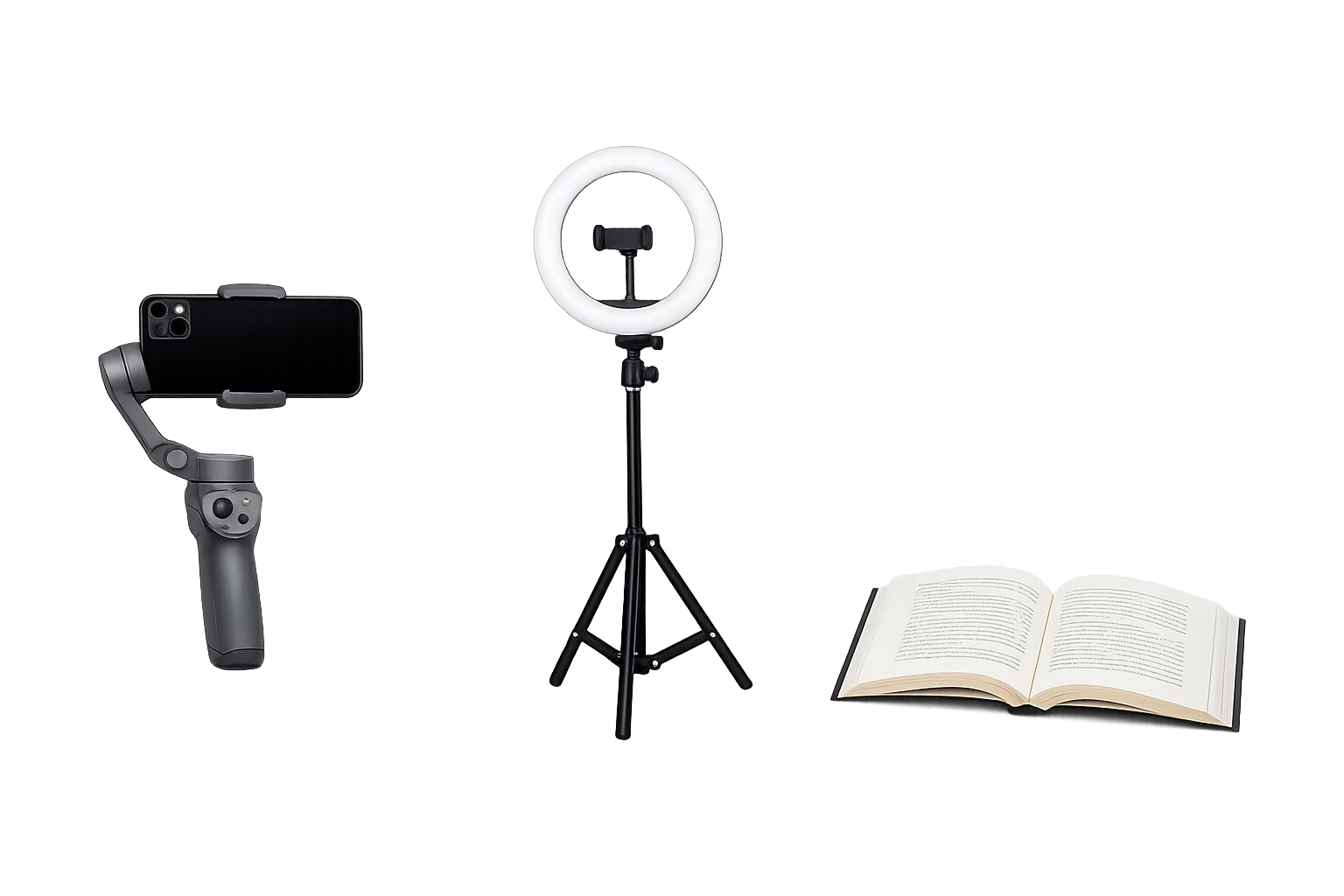
Here's the practical breakdown. Not everyone has the same time, money, or comfort with a camera. That's fine. There's an entry point for every level.

Selling Your Book to a Studio
Again, this is no easy task, but imagine you’re reaching out to a film agent or a movie studio. What has the better chance: sending them your book with a pitch deck? Adapting a screenplay and sending that over?
Or sending them some of these short videos that you’ve published and showing, “Hey, this one had 20,000 views.” Takes a couple minutes to check out and there’s audience proof.
And again, the format is evolving. It’s not, “I’ll create these 2-minute videos and then maybe Netflix will invest in a 2-hour movie.” No. Netflix and other platforms are looking for the 2-minute videos. Short form is very much part of the home entertainment equation.
→ Talk to DiggyPOD about building your author platform
FAQ’s
How often should I post video content for my book?
Consistency matters more than frequency. One video per week, posted reliably, will outperform five videos in a burst followed by silence. Start with what you can actually sustain. For most authors, one to two short videos per week is realistic without it becoming a second job.
What's a realistic expectation for book sales from short-form video?
One Long Overdue book saw 10 to 15 sales on the day a single influencer posted about it. That’s one post, one creator, immediate traceable result. Organic results vary widely based on your platform, your genre, and whether your content finds the right audience. The more important metric, especially early, is email signups and audience growth, because those compound over time in a way that a single spike in sales doesn’t.
Can I hire someone to create this content for me?
Yes. Social media managers who specialize in books and authors are increasingly common. BookTok creators who accept review copies and produce content are another option. For higher-production work, local videographers are usually more affordable than agency rates. The most important thing is that the content feels authentic to you and your book, even if someone else is helping produce it.
Does this strategy work for nonfiction as well as fiction?
It works extremely well for nonfiction, possibly better. The “one idea per video” format is tailor-made for business books, memoirs, self-help, and how-to content. A thirty-second clip that delivers one genuinely useful insight from your book, attributed to you, with the book visible, is both useful content and effective marketing in the same package.
Do I need to be on TikTok to do book marketing with short-form video?
No, but TikTok (and BookTok specifically) has the largest and most active book community of any short-form platform. Instagram Reels and YouTube Shorts are strong alternatives, and the same video can be posted to all three without modification. Start with whichever platform feels most natural and add others as you build a routine.