
Audiobook vs. Ebook: Which Format Should You Add to Your Print Book First?
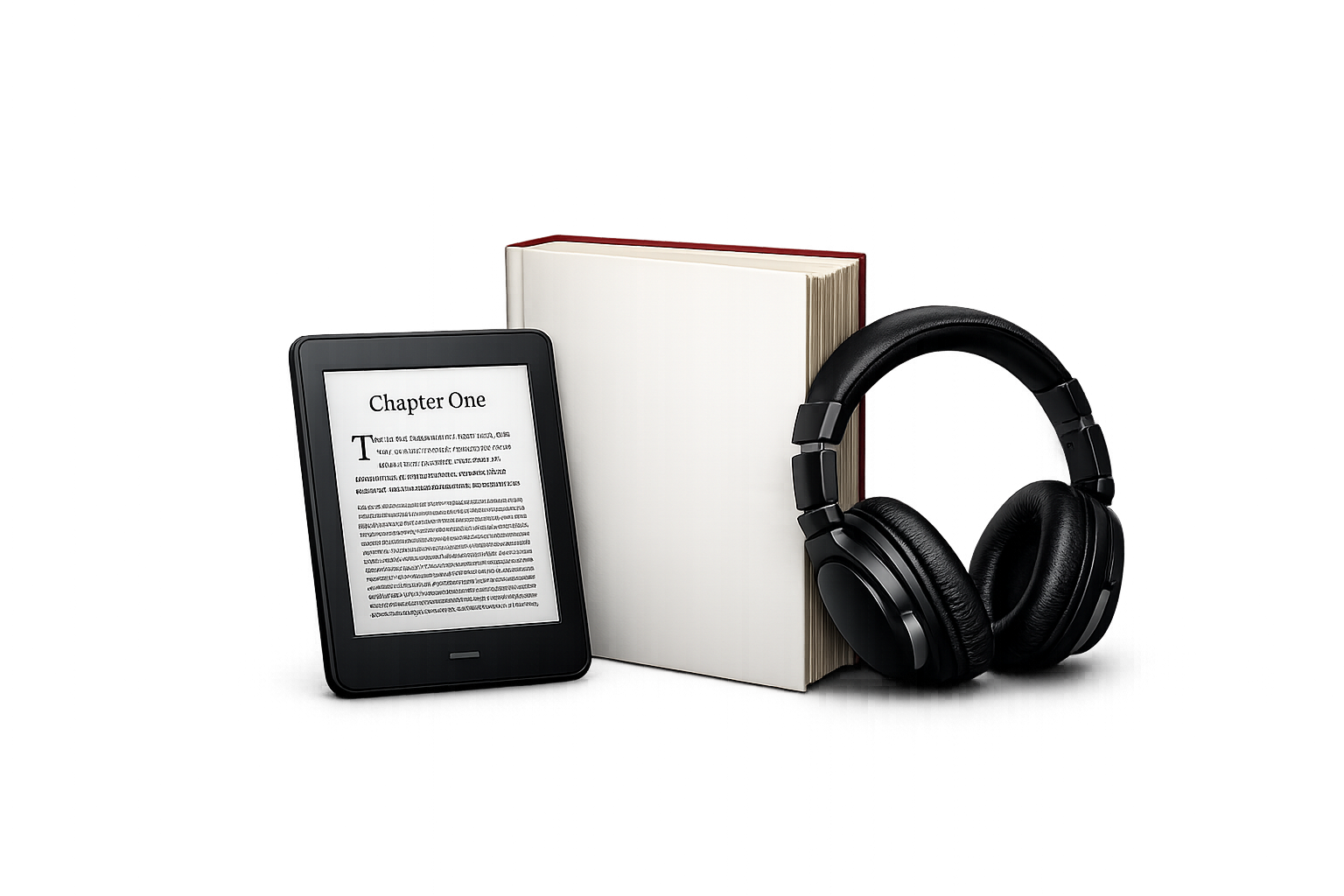
Congratulations, you’ve published your print book.
And now you’re starting to have people ask, “Is this on Kindle?” Or, “Have you thought about doing an audiobook?”
So, which one should you tackle first: eBook or Audiobook?
I don’t love answering questions with “It depends” but, well, it depends… on your book, your audience, and how much runway you have. But there's a clear framework for thinking it through, and most authors land in the same place once they work through it.
Here's how I think about it.


The Fundamental Difference Between the Two Formats
Ebooks and audiobooks reach people in genuinely different situations.
An ebook reaches readers, people who are choosing to sit and read, probably at home, maybe on a lunch break, probably late at night. They found your book, they want it right now, and they want it at a price that doesn't require a second thought. Ebooks are impulse purchases. They live in a world of algorithms and Kindle Unlimited and 3am "just one more chapter."
An audiobook reaches people who aren't sitting down to read at all. Commuters. Runners. People making dinner (or that giant pile of dishes after dinner), folding laundry, driving four hours to visit family. Audiobook listeners often consume books they would never make time to sit and read, which means your audiobook can reach an audience that has no overlap whatsoever with your print or ebook readers.
Neither format is better. They're different. The question is which one serves your specific book and audience better first.
When to Do the Ebook First

Your book is text-heavy and straightforward
Novels, memoirs, business books, personal development, how-to: books that are primarily words translate cleanly to ebook format. The conversion process is straightforward, the cost is lower than audiobook production, and the turnaround is faster.

Your primary distribution channel is Amazon
If you're building an audience through Amazon (through KDP's discovery algorithm, Kindle Unlimited, or Amazon advertising), having your ebook live matters. Amazon's ecosystem cross-promotes print and digital editions of the same title. Being on both surfaces more opportunities.

You want to move quickly and keep costs down
Professional ebook conversion starts at $300. Professional audiobook production with narration, editing, and mastering runs significantly higher. If budget is a constraint, ebook first gives you a digital presence while you build toward audio.

Your readers are screen-based
If your audience is primarily people who discovered you online (through your newsletter, your social media, your blog), they're screen-native readers. Ebook is likely how they prefer to read.
When to Do the Audiobook First

Your book is built for listening
Business books. Self-help. Motivational nonfiction. Books with a strong authorial voice. Books you might summarize in a keynote or podcast. These formats perform exceptionally well in audio, sometimes better than in print or ebook, because the content is designed to be absorbed in sequence, without the need to flip back and re-read.

You speak publicly or have a podcast audience
If you're already in the audio world (speaking at conferences, guesting on podcasts, hosting your own show), your audience already knows your voice. An audiobook is a natural extension of what they already love about you. Lead with audio.

You want to reach non-readers
Some audiences are enthusiastic about books but don't make time to read. Business professionals. Parents of young kids. People in professions that involve a lot of driving. If your book is targeting any of those groups, audio is often a better first move than ebook.

Your book has a long shelf life
Audiobook listeners tend to pay more per title than ebook buyers, and they're often more committed finishers. A book that holds up to repeated recommendation, a business classic, a cornerstone personal development title, a definitive memoir, has strong audiobook economics over time.
The Case for Doing Both at the Same Time
Authors who sell the most books are the ones offering every format.
A complete author platform (print, ebook, audiobook) means a reader can discover you however they discover books and purchase in whatever format they prefer right now. Your print book sells at events. Your ebook sells at 11pm on Amazon. Your audiobook sells to someone's morning commute. Three revenue streams from one book. And there are some readers out there (I call them the “Switch Hitters”) who will buy 2-3 versions of your book to read in different contexts.
The practical challenge is sequencing the investment. Most self-published authors can't do all three simultaneously. The framework above gives you a starting point. And if you're working with DiggyPOD on print, adding ebook conversion and audiobook production is a natural progression. Your manuscript is already in the system.


The Honest Financial Comparison
Ebook: Professional conversion starts at $300. Royalties on Amazon KDP are 70% on titles priced $2.99–$12.99. On a $9.99 ebook, that's $6.99 per sale.
Audiobook: Professional production typically runs $1,500–$5,000+ depending on length and narration approach. Royalties on ACX are 40% exclusive, 25% non-exclusive. On a $20 audiobook with exclusive distribution, that's $8 per sale.
Per-unit audiobook earnings are often higher. The upfront production cost is also higher. The payback calculation depends on your sales volume and timeline, which is why audiobooks tend to make more sense as a second or third move for most self-published authors, once the print edition has validated that the book has an audience.
What the Same Book Sounds Like Across Formats
I worked on Omar Bailey's book Heart & Sole at Long Overdue Books. I love that book. Strong narrative voice. Omar has a presence and a strong voice that you feel in the writing.
He also has an audiobook edition on Amazon. And every time I listen to a section of it, I have to say, even as someone who primarily reads books vs. listening to them, I think the audiobook is an even better experience. He has these great stories about his life and pursuit of his dream of designing sneakers, and hearing these directly from him takes things up a level.
That's what the format decision is really about. Not which one earns more royalties. Which one creates the right relationship between your book and the people who need to find it.
→ Talk to DiggyPOD about ebook and audiobook options

FAQ’s
Can I publish an ebook and an audiobook at the same time?
Yes. They’re produced and distributed independently. Many authors launch print and ebook simultaneously, then add audiobook within the first year.
Do audiobooks sell better than ebooks?
Audiobooks and ebooks sell to different audiences. Audiobooks have been the fastest-growing book format for several consecutive years. For many genres (business, self-help, memoir), audiobook revenue now rivals or exceeds ebook revenue for self-published authors.
Does having an audiobook help with discoverability?
Yes, in two ways. Audible has its own search and recommendation algorithm, which surfaces audiobooks independently of Amazon’s ebook search. Additionally, listeners who discover your audiobook will often buy your print or ebook version afterward. The formats cross-promote each other.
If I do an ebook through DiggyPOD, can I also do the audiobook?
Yes. DiggyPOD handles both. If your manuscript is already in the system from ebook conversion or print, audiobook production starts from that same source material.